ecology

In the Snowy Mountains Forest, Taiwan

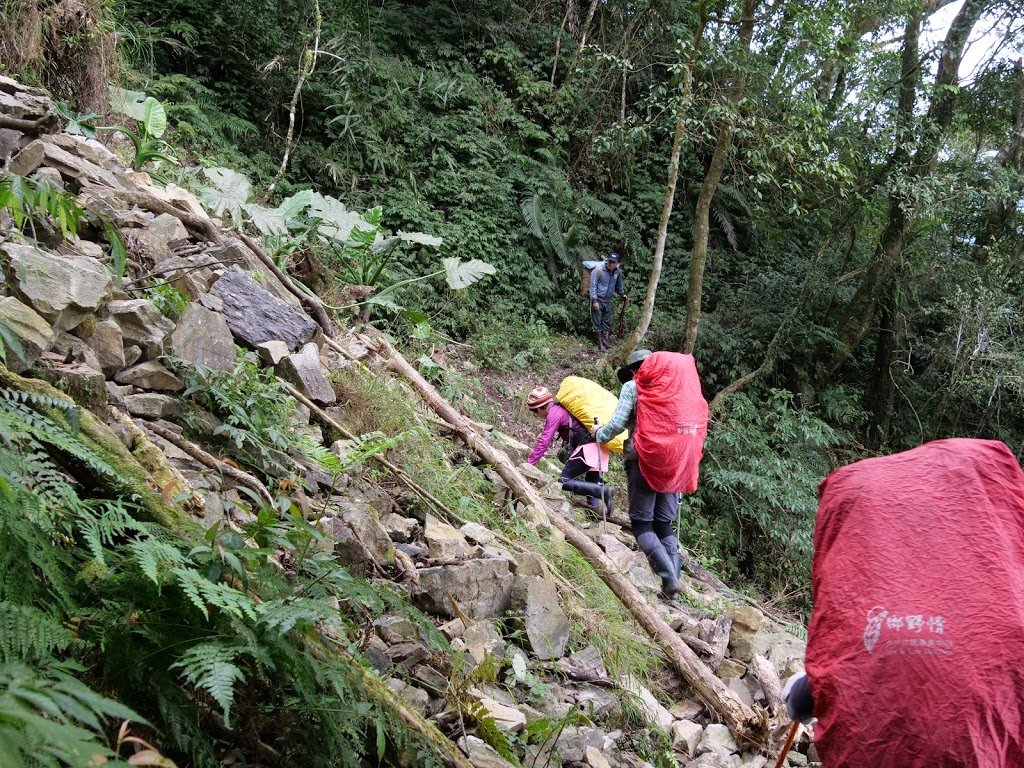
The teachers of CuXin school in Yilan, Taiwan have been interested to find a location for a week-long wilderness camp for the year 9 class. We wanted to design a camp where students will have to rely on good survival skills and self management. We also want them to be able to learn the lore of the forest, such as how to identify and use the plants, now to build shelters, how to track animals, and how to understand the processes at work in a forest ecosystem. We set off on a 3 day trek into the Snowy Mountain Range, guided by two hunters of the local aboriginal Taiha tribe. After about 7 hours walk we arrived at a very simple tarp shelter which was  to be our base for the three days. The shelter was very simple. It kept us dry during some big rain showers and from it we went on several walks to explore the forest. During our walks we learnt about useful trees and medicinal plants, animal behaviours, fishing and hunting methods, and about the history of the aboriginal tribes through the years of the Japanese occupation of Taiwan. The tribe used to be head hunters and we were given vivid descriptions of how the heads of the enemy dead were collected and displayed. Achung taught us to recognise several animal prints including wild pigs, goats, barking deer, a type of wild cat and the crab-eating mongoose. He was able to estimate the size and weight of each of the animals and give a precise day and time for when the prints were made. It was a unique experience to wander through the dense temperate forest, realising that there was so much going on if only you have the eyes and awareness to see it. Epiphytic ferns decorated many of the trees. These colourful fungi are some of the decomposers that form a vital role in the life cycle of the forest, turning dead material back into fertile soil. I made this video that gives some more impressions of our experience on this trip:

In the Snowy Mountains Forest, Taiwan Read More »

1000 Geothermal Springs

GNS Science and Waikato University are investigating one thousand of the geothermal hot springs in New Zealand’s North Island. The goal of this ambitious 1000 Springs Research Project is to understand and compare the microbiology of these springs along with their physical  and chemical make-up. That adds up to a lot of sampling trips, processing of data and investigation of the findings! This video gives an overview of the different types of Geothermal Springs in the area: The GeoTrips website  www.geotrips.org.nz  includes lots of geothermal areas that you can visit such as this one at Waiotapu: www.geotrips.org.nz/trip.html?id=50 Some of these hot springs are scummy looking puddles like this one, that don’t seem to have much to say about themselves apart from the obvious message to stay clear and avoid being swallowed up by scalding mud. Bruce Mountain/ GNS Science Others are of course very spectacular and beautiful iconic tourist attractions such as the Champagne Pool at Waiotapu… A few days ago I joined some of the GNS Science team; Jean Power, Dave Evans and Matt Stott, (who leads the project)  on a sampling trip to Whakarewarewa village in Rotorua, The village is an extraordinary place, where a community has learnt to live in close relationship to an ever changing geothermal environment. Home heating, hot water, cooking and bathing is provided by the hot springs, although there are interesting downsides, such as occasional ground collapses and holes appearing next to houses Safety first! Investigating hot springs is a potentially hazardous activity. Sometimes well known and well trodden areas have suddenly caved in because the ground gets eroded from below. Scientists use various safety techniques as well as a strong sense of caution when approaching the springs. Dave Evans uses a long pole to reach into a hot pool to get a water sample, while Jean adds information to a tablet with an application that allows all the data to be quickly uploaded to the 1000 Springs database website.  Several water samples are taken, and the team measures the temperature, pH, conductivity, turbidity, dissolved oxygen and the redox potential of each spring, as well as taking photographs and other metadata. Geothermal ecosystems are globally rare and little is known about the unique populations of microorganisms (Bacteria and Archaea) that inhabit these environments or the ecological conditions that support them. Here Dave is carefully labellling the sample bottles. Samples are filtered and prepared for analysis after returning to the lab. To identify all the different species, the DNA in the sample is extracted and analysed, and the chemical content of the water and the dissolved gases is measured. Extremophiles are microorganisms that thrive in harsh environmental conditions – where temperatures can be as high as 122˚C, the pH can range from highly acidic to strongly alkaline, and there are elevated concentrations of salts and/or heavy metals. Different microbes are responsible for the spectacular colours seen in hot springs. The colour zonation relates directly to particular temperature ranges which the resident species have tolerance for. There are thought to be more than 15000 geothermal features in New Zealand, and each of them will have a distinct microbial community and often include many undiscovered species The selected springs span the known pH ranges (pH 0-9) and temperature ranges (20°C-99°C) or have unusual geochemical or geophysical profiles. Sites with high cultural or conservation value are also included. All this new knowledge will allow New Zealand to assess the conservation, cultural, recreational and resource development value of the microbes in geothermal ecosystems, and enable further future microbial ecology research and discovery. Photo by Matt Stott / GNS Science My role in these field trips is to visually document the scientific process and communicate about the research to all who are interested. Scientists are invariably passionate and enthusiastic about their work, and are keen for others to find out about what they do. Here is our video of the 1000 Springs team in action:

1000 Geothermal Springs Read More »

Amazing Deep Sea Life

Yesterday I was talking to the NIWA biologists about some of their discoveries from this expedition to the Kermadec undersea volcanoes. In this first photo, Malcolm Clark is having a last look at the sled net to check that all sea creatures have been collected from it before it is sent down to the bottom again to take more samples. Rob Stewart has created an impressive series of photographs of the animals found so far. He has a top quality studio set up in the biology lab on board and takes exquisite shots of the specimens.(Thanks to Kareen Schnabel, NIWA for these first two photos.) Here is a small gallery of some of Rob’s pictures, chosen from his amazing collection. All of them courtesy of NIWA: This little lobster like crustacean was unknown until about 20 years ago. It is about 8 cm long. This is a crinoid or sea lily. Related forms are found in the fossil record from long ago. They are related to starfish and fan out their feather like branches to catch food floating by in the water. This one can actually move along the sea bed using its leg- like lower branches. Its length is about 20cm. This bivalve mollusc from Rumble 2 West Volcano has never been seen before by the NIWA biologists. It may be new to science. It is about 4 cm across. This fish is known as a rat tail. It scavenges about the sea floor in the murky depths seeking scraps to eat. This specimen is about 30 cm in length. It belongs to a large family of related species that are found between 30 to over 3000 metres of water depth. This sponge is a filter feeder. It is made of glass (silica), and those spines are sharp! Its overall length is 30 cm. This is a branching gorgonian coral from Clark Volcano. Unlike corals that live near the surface of the sea, deep sea corals do not have photosynthesising algae associated with them. They have to take all their food from the water that flows over them, using their tiny polyps. Brittle stars are very often found entwined in the coral branches. Here is a segmented worm or polychaete. It is carnivorous and also lives in the branching coral. Total length of this specimen is about 8 cm.  This brittle star uses its sucker like tube feet to move around in the branches of coral and also to catch food and carry it into its mouth in the central disc. This image is about 3 cm across.

Amazing Deep Sea Life Read More »

Communal Living on a Kermadec Volcano

The first image shows the depth profile created by the ship’s sonar as it passed over the summit of Clark Volcano. It has the classic cone shaped profile of a typical land volcano such as Taranaki. They stick up above the deeper plains of the ocean floor and provide quite different habitats for deep sea creatures. The plains are mainly very soft muddy sediments which contain an abundance of worms and other burrowing animals. The seamounts on the other hand are covered by harder volcanic rocks that provide a solid surface for a different living community. In order to gather actual samples of the rocks and animals that occur on the surface of these seamounts, a simple method is to use a sled. This is a crude metal cage with a net at the back. It is pulled along the sea floor for a short distance and then hauled up by winch. The second photo shows a fully laden sled just arriving back at the surface. Once the sled has been emptied onto the deck, the biologists quickly pick off the largest and most obvious specimens and put them into a bucket of sea water. Then the rocks are scooped up into the yellow bins and checked more carefully for smaller creatures. Once all the different finds have been sorted and given an initial identification, they are put into carefully labelled bottles and preserved for later more detailed research. These small lobster-like crustaceans probably all belong to the same species.They are often found tucked away into a rock crevice with just their claws showing, ready to catch some food. Rob Stewart, one of the team of NIWA biologists, showed me this large piece of coral that has come up with the sled. This branching coral often grows on seamounts and provides a living space for many other animals to hide in.This one had several residents, including the large worm that you can see, as well as a hydroid coral, a couple of large flower like solitary corals, and a brittle star or two. Rob has a camera set up in his lab to take a photographic record of such prize finds. The last photo shows another view of this sample in all its glory. Because the different seamounts along the Kermadec Arc are separated from each other by the deeper ocean plains, the biologists are interested to compare the living communities on them. This will help improve our knowledge of how these animals have spread and diversified through time along a line of active volcanoes.

Communal Living on a Kermadec Volcano Read More »

Images from the Unknown

TOWCAM is an underwater camera that is lowered down to the sea floor and pulled along just above the bottom on a long winch line. It has an altimeter on it that allows the scientists to pull it up or lower it to keep it just above the bed as the ship drags it along sideways. Here you can see TOWCAM being lowered into the water and down into the deep blue depths to over 1100 metres depth. Every ten seconds it takes a photo timed with a strobe flash to give a stream of images along the designated path.  The red line on the map shows yesterdays mission across the summit of the southern cone of Clark Volcano, where hydrothermal activity was expected to be occurring. The total length of the path shown is about 3 kilometres. Up on the ship’s bridge, the TOWCAM team from Woods Hole Oceanographic Institution in the US, manually adjusts the winch to keep the camera as close as possible to 4 metres above the sea bed. I watched Marshall Swartz as he continuously monitored the computer screen and adjusted the winch up and down in response to TOWCAMs signals of changing water depth. When TOWCAM has completed its mission after several hours, it is pulled up to the surface again. Tim Shank, the biologist in the WHOI team, was delighted to find that by chance TOWCAM had hauled up some specimens off the sea floor including a beautiful coral, some brittle stars, and a crinoid. Here are three of the three thousand photos that were taken on TOWCAMs first mission on Clark. They were downloaded after the camera had resurfaced, and Tim checked each one of them for signs of hydrothermal activity, variations in the geology, and evidence of interesting biological species. The first of the undersea pictures shown here includes a hard coral and some sea anemones living on hard volcanic basalt that was erupted from Clark Volcano. In the next photo, you can see the yellowish colour of softer sediments that have been altered by hydrothermal activity. Lastly here is an image of a steep face of volcanic lava that has also been stained by ongoing hydrothermal activity.

Images from the Unknown Read More »